
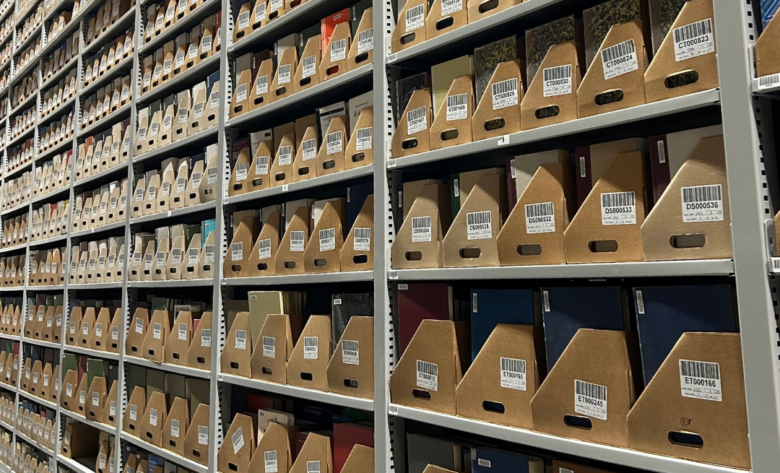
Binghamton University Libraries has a vast collection of books and materials, with over 1.7 million print volumes, 2 million electronic titles, four thousand archives and manuscripts, and more. However, with so many items to hold, plus offering individual project spaces and collaborative areas throughout the Libraries, how can all this material fit on the shelves?
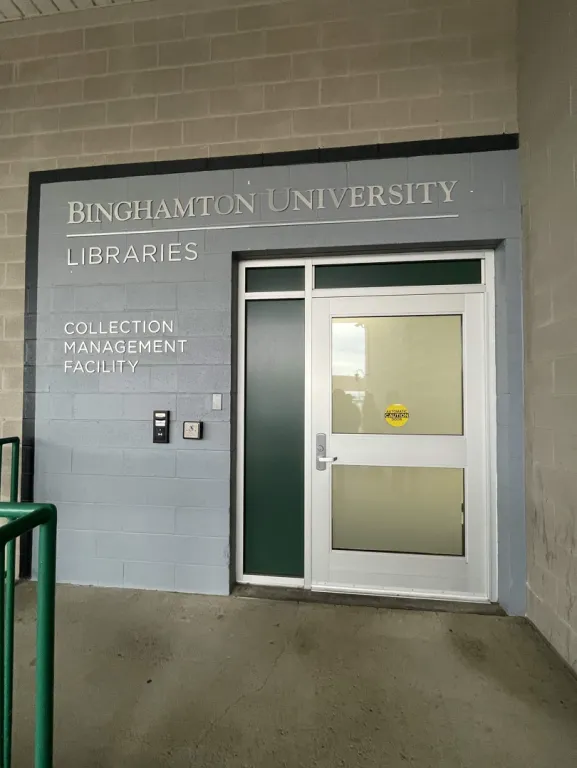
While many of the collections are held in the Libraries’ three primary locations (Bartle, Science, and the University Downtown Center), a larger part of the collections are held at the Collection Management Facility (CMF). Opened in November 2023, the CMF includes over six thousand shelves, and each shelf can hold up to five hundred pounds of material. Currently, it houses about 634,000 items. Row 1 in the CMF includes all the microfilms and DVDs, and the last row in the facility includes anything Special Collections-related. All the rows in between hold the books. While all the books in the library spaces are organized by theme or subject, the books in the CMF are organized by size.
To understand the CMF better, I interviewed Hannah Morrison, the Assistant Director for Storage and Delivery Services at the Binghamton University Libraries. During the interview, she introduced me to CAIASOFT, the software used by Binghamton Libraries (and several university libraries across the US, UK, and Canada) to keep the CMF running and organized.
Morrison and her team utilize CAIASOFT for a variety of services, including accessioning incoming materials at the CMF, keeping track of materials that are loaned out of the CMF, and monitoring delivery times of materials from the CMF to faculty and students. All the materials at the CMF are loanable (except for a few Special Collections items) and can be requested through the Libraries’ Find It! system on the website.
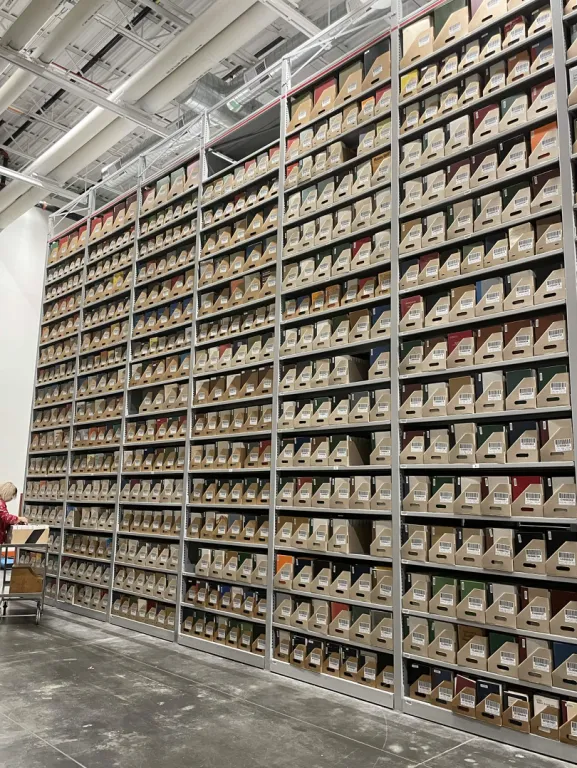
The types of items that are found in the CMF are typically low-circulating or non-circulating items and duplicates of items held in the Libraries’ primary locations. “When you have a chunk of your collections in an off-site facility, it frees up library spaces and study spaces within a library to make room for new materials and other services,” Morrison explained, adding that it’s one of the biggest reasons why more and more universities are investing in off-site facilities for their libraries. Furthermore, it helps in the preservation of older, more delicate materials since the CMF is temperature-controlled to be cooler than any other space in the Binghamton Libraries.
The process of loaning and processing anything in the CMF is extremely dependent on teamwork. One team member will accession the returning material and process the requests; while another team member will retrieve the materials in the facility. “Once we receive a request from students and faculty for any materials at the CMF,” Morrison explained, “my team pulls it out, and we have a courier. He visits all the branches every single day, picking up and dropping off materials, and the process is usually completed within twenty-four hours or one business day.”
During the interview, she emphasized the collaborative nature of everything that happens behind the scenes at the CMF, which is reflected in the entire Binghamton Libraries in general. Touring the CMF and interviewing Hannah helped me understand the scale of behind-the-scenes work that goes into keeping the Binghamton Libraries running and organized. The CMF team is a part of the general Libraries team, all of whom work tirelessly to ensure that the libraries’ materials and spaces are available and ready for students and faculty to utilize at all times.