

The Libraries celebrate Women’s History Month by highlighting works in our collections by and about women and nonbinary people. Women’s history means the representation of historically excluded groups, such as people of color, the LGBTQ community and people with different abilities. It involves accomplishments in fields including but not limited history, literature, philosophy, social justice and STEM fields. We encourage you to read works by women and feminist writers this month and throughout the year!
Muslim Women in Science, Past and Present
by Elmira Akhmetova
This title in the Cambridge Elements series examines issues related to Muslim women’s engagement in science and scholarship both past and present. The first two parts discuss the contributions made by Muslim women to scholarly, scientific, and technological advancements. The third part discusses the factors that have contributed to a decline in Muslim women’s scholarly involvement in Islamic civilisation, the veracity of historical accounts, and the constraints in original knowledge production in contemporary Muslim societies. It finds that there are no religious restrictions rooted in the Qur’an that forbid women from pursuing a profession in science, whether as learners or practitioners. Yet some economic and political circumstances, cultural influences, and outdated interpretations of Islam produce discrimination against women in Muslim societies, and lead to their underrepresentation in scientific research and academia.
Trans Feminist Epistemologies in the US Second Wave
by Emily Cousens
Why do “second wave” and “trans feminism” rarely get considered together? Challenging the idea that trans feminism is antagonistic to, or arrived after, second wave feminism, Emily Cousens re-orients trans epistemologies as crucial sites of second wave feminist theorising. By revisiting the contributions of trans individuals writing in underground print publications, as well as the more well-known arguments of Andrea Dworkin, this book demonstrates that valuable yet overlooked trans feminist philosophies of sex and gender were present throughout the US second wave. It argues that not only were these trans feminist epistemologies an important component of second wave feminism’s knowledge production, but that this period has an unacknowledged trans feminist legacy.
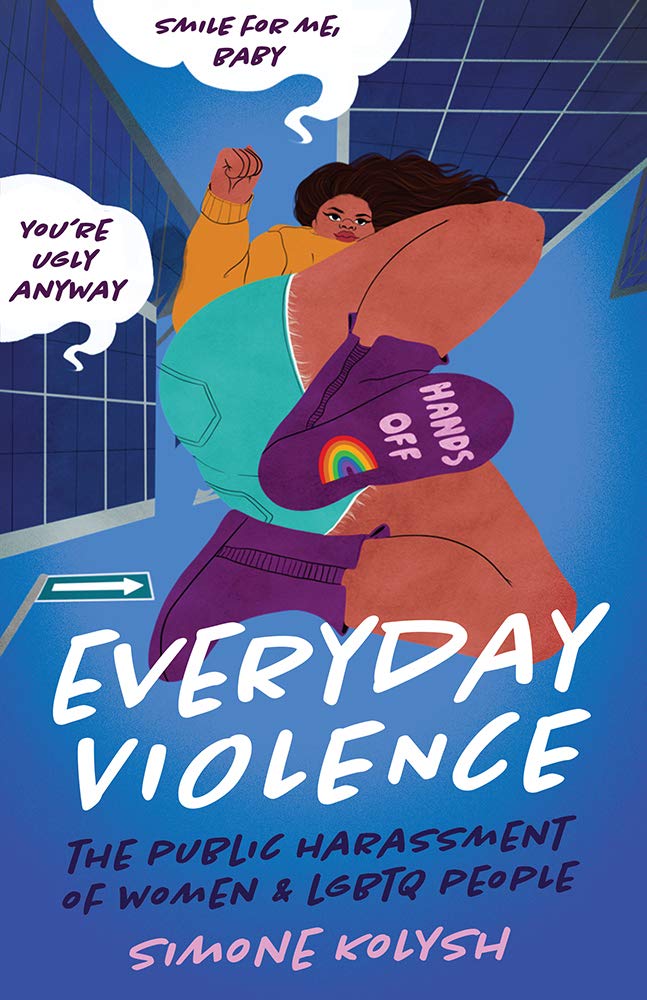
Everyday Violence: The Public Harassment of Women and LGBTQ People
by Simone Kolysh
Everyday Violence is based on ten years of scholarly rage against catcalling and aggression directed at women and Lesbian, Gay, Bisexual, Transgender and Queer (LGBTQ) people of New York City. Simone Kolysh recasts public harassment as everyday violence and demands an immediate end to this pervasive social problem. Analyzing interviews with initiators and recipients of everyday violence through an intersectional lens, Kolysh argues that gender and sexuality, shaped by race, class, and space, are violent processes that are reproduced through these interactions in the public sphere. They examine short and long-term impacts and make inroads in urban sociology, queer and trans geographies, and feminist thought. Kolysh also draws a connection between public harassment, gentrification, and police brutality resisting criminalizing narratives in favor of restorative justice. Through this work, they hope for a future where women and LGBTQ people can live on their own terms, free from violence.
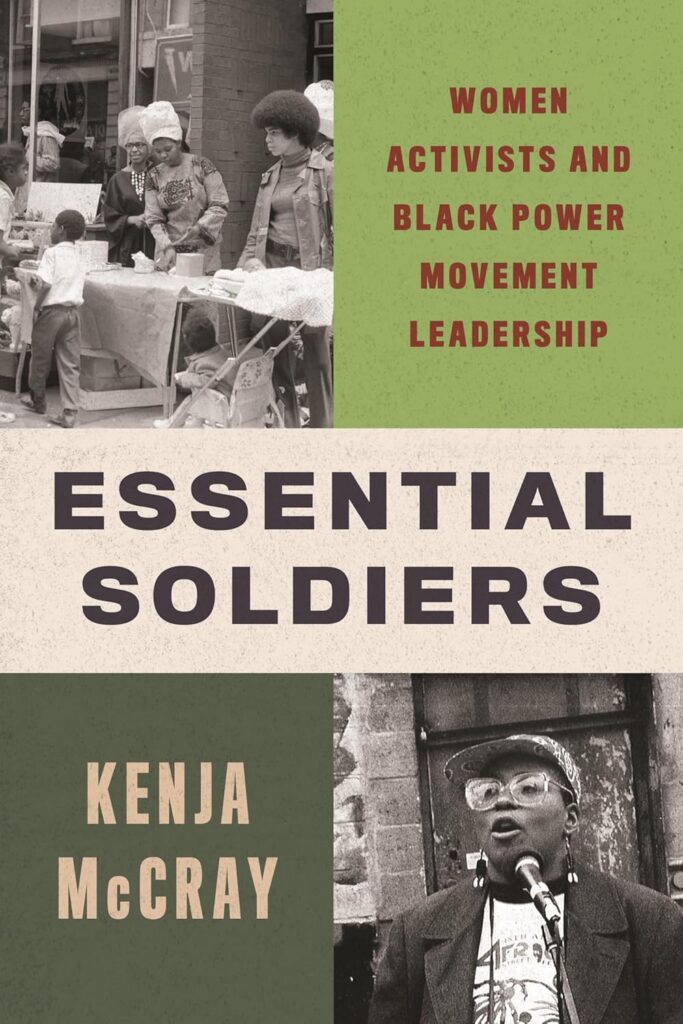
Essential Soldiers: Women Activists and Black Power Movement Leadership
by Kenja McCray
A new perspective on women’s Black Power leadership legacies Academics and popular commentors have expressed common sentiments about the Black Power movement of the 1960s and 1970s–that it was male dominated and overrun with autocratic leaders. Yet women’s strategizing, management, and sustained work were integral to movement organizations’ functioning, and female advocates of cultural nationalism often exhibited a unique service-oriented, collaborative leadership style. Essential Soldiers documents a variety of women Pan-African nationalists’ experiences, considering the ways they produced a distinctive kind of leadership through their devotion and service to the struggle for freedom and equality. Relying on oral histories, textual archival material, and scholarly literature, this book delves into women’s organizing and resistance efforts, investigating how they challenged the one-dimensional notions of gender roles within cultural nationalist organizations. Revealing a form of Black Power leadership that has never been highlighted, Kenja McCray explores how women articulated and used their power to transform themselves and their environments. Through her examination, McCray argues that women’s Pan-Africanist cultural nationalist activism embodied a work-centered, people-centered, and African-centered form of service leadership. A dynamic and fascinating narrative of African American women activists, Essential Soldiers provides a new vantage point for considering Black Power leadership legacies.
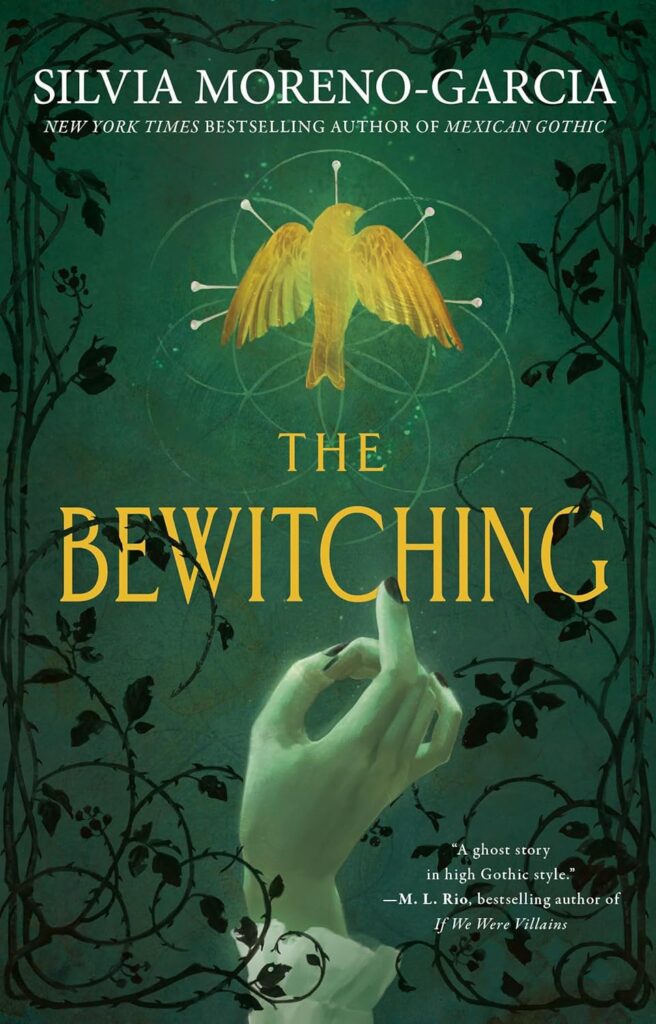
The Bewitching
by Silvia Moreno-Garcia
Back then, when I was a young woman, there were still witches.’ That was how Nana Alba always began the stories she told her great-granddaughter Minerva–stories that have stayed with Minerva all her life. Perhaps that’s why Minerva has become a graduate student focused on the history of horror literature and is researching the life of Beatrice Tremblay, an obscure author of macabre tales. In the course of assembling her thesis, Minerva uncovers information that reveals that Tremblay’s most famous novel, The Vanishing, was inspired by a true story: Decades earlier, during the Great Depression, Tremblay attended the same university where Minerva is now studying and became obsessed with her beautiful and otherworldly roommate, who then disappeared under mysterious circumstances. As Minerva descends ever deeper into Tremblay’s manuscript, she begins to sense that the malign force that stalked Tremblay and the missing girl might still walk the halls of the campus. These disturbing events also echo the stories Nana Alba told about her girlhood in 1900s Mexico, where she had a terrifying encounter with a witch. Minerva suspects that the same shadow that darkened the lives of her great-grandmother and Beatrice Tremblay is now threatening her own in 1990s Massachusetts. An academic career can be a punishing pursuit, but it might turn outright deadly when witchcraft is involved.
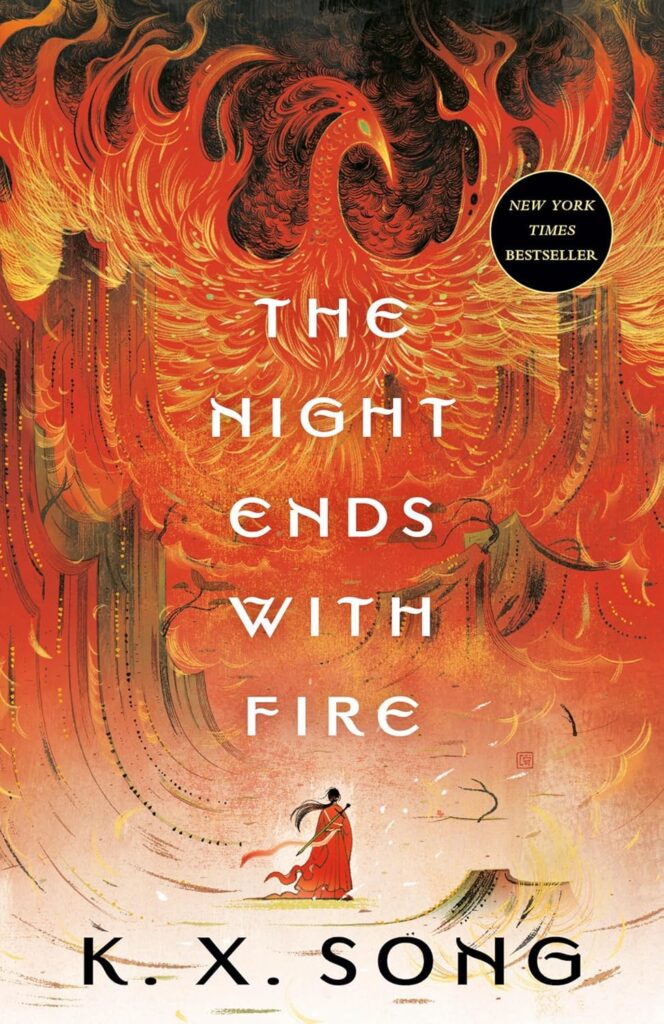
The Night Ends with Fire
by K.X. Song
Infused with magic and romance, this sweeping fantasy adventure inspired by the legend of Mulan follows a young woman determined to choose her own destiny–even if that means going against everyone she loves. The Three Kingdoms are at war, but Meilin’s father refuses to answer the imperial draft. Trapped by his opium addiction, he plans to sell Meilin for her dowry. But when Meilin discovers her husband-to-be is another violent, ill-tempered man, she realizes that nothing will change for her unless she takes matters into her own hands. The very next day, she disguises herself as a boy and enlists in her father’s place. In the army, Meilin’s relentless hard work brings her recognition, friendship–and a growing closeness with Sky, a prince turned training partner. But has she simply exchanged one prison for another? As her kingdom barrels toward destruction, Meilin begins to have visions of a sea dragon spirit that offers her true power and freedom, but with a deadly price. With the future of the Three Kingdoms hanging in the balance, Meilin will need to decide whom to trust–Sky, who inspires her loyalty and love; the sea dragon spirit, who has his own murky agenda; or an infuriating enemy prince who makes her question everything she once knew–about her kingdom and about her own heart.
Book descriptions based on publisher information