
Binghamton University Libraries offers several specialized services for graduate and postgraduate students at Binghamton on top of its regular services for all students. In Grad Resources, the second article in the Library+ series, we highlight a few of the services available to graduate and postgraduate students.
The ORB

The Open Repository @ Binghamton (ORB) is an open-access repository for scholarly and creative works. You can find a number of resources through the ORB for research and classes. You can share your own work there as well to reach a larger audience.
The ORB features six collections. The Academic Schools, Departments and Divisions collection features resources categorized by each college/school at Binghamton (such as Watson, Harpur and SOM). It is then further categorized by each major within the college. Many of these are works that were considered for departmental faculty/student scholarships and works submitted for Capstone projects. The Student Research collection focuses on six different areas: Division of Research, First-Year Research Immersion (FRI), Library Research Scholars, Dissertations, Theses and Capstones, Podcasts and The Manuscript: Journal of Taylor Swift Studies.
Resources available include podcasts, oral histories, data sets, and more. All of these resources are a good way to see research and data created and discovered by Binghamton researchers. Find more about The ORB on their website.
ORCID iD
The Open Researcher and Contributor ID (ORCID) is a service that provides identification for all researchers and contributors. Working like a “research LinkedIn” of sorts, ORCID iD ensures that researchers and contributors receive credit for their work. By registering for an ORCID iD, researchers can easily connect publications to the iD that moves with the researcher/contributor throughout their careers. ORCID identifiers are not tied to a specific institution or workplace and helps clear up name ambiguity in the world of research. Best of all, ORCID iD’s are non-proprietary and do not require and fees to participate.
Find more about ORCID iD,including how to get one, on the Libraries website.
Graduate Study Commons
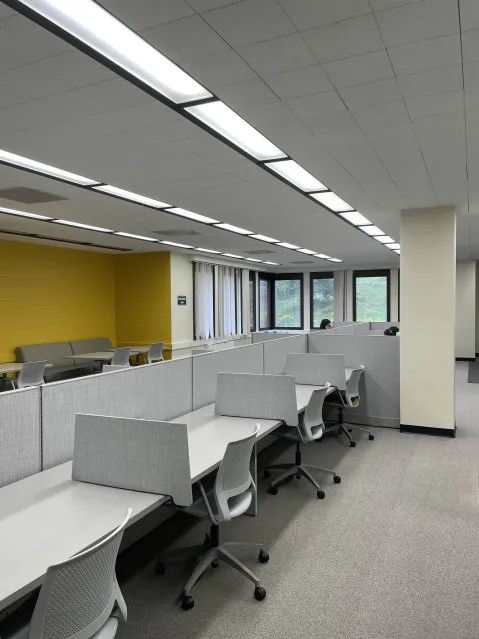
All Graduate students have access to the Graduate Study Commons located on the first floor of Bartle Library.Next to the Information Commons, the Study Commons includes individual work spaces, lounge seating, scanners and printers. For exclusive access the Study Commons, graduate students must tap their Binghamton ID.
Locked Study Carrels
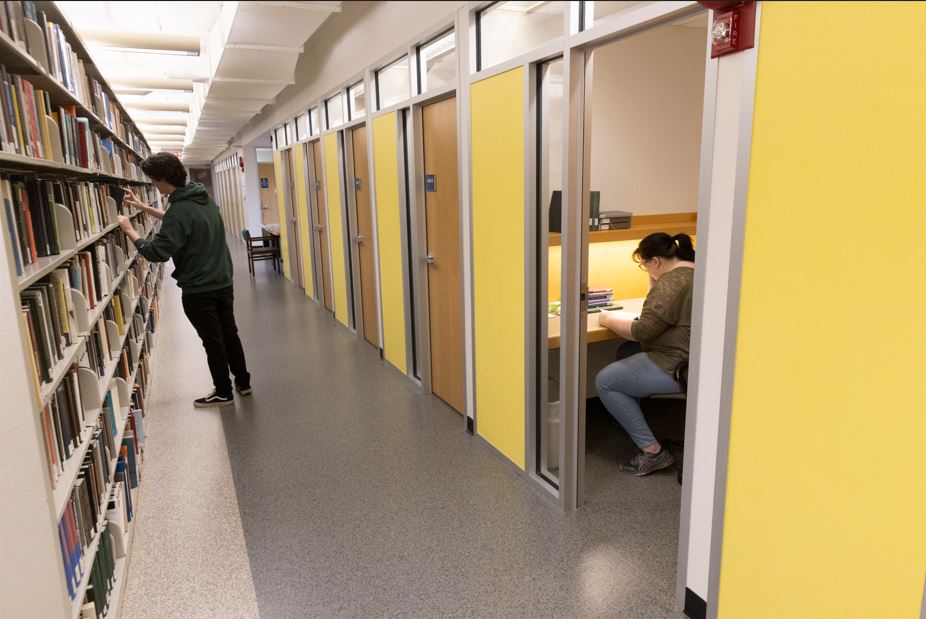
We know research can involve managing a lot of articles and physical books of all different sizes and lengths. To make things a little easier, PhD and ABD graduate students can have access to a locked study carrel. Available on the fourth floor of Bartle Library, this space can serve as essentially your own research office where you can store your research materials and visit to do your research. Carrels require an online application and are assigned for a full academic year, typically at the beginning of the fall and summer semesters.
Learn more about locked study carrels on the Libraries website or email readerservices@binghamton.edu.